If you are looking for a little elbow room near Inman, buying small acreage can feel like a smart move until the details start stacking up. A tract that looks simple online can have very different rules for access, utilities, septic, floodplain, and future building plans. The good news is that with the right local checks, you can spot the difference between a great opportunity and an expensive surprise. Let’s dive in.
Why small acreage near Inman takes extra homework
Buying a few acres is not the same as buying a lot in a finished subdivision. Near Inman, the first big question is whether the property sits inside the City of Inman or in unincorporated Spartanburg County. That matters because the rules can change significantly over a short distance.
Spartanburg County says unincorporated land is governed by either the Unified Land Management Ordinance or the Performance Zoning Ordinance, depending on the planning area. The City of Inman has its own zoning ordinance, planning commission, and zoning-board process. For you, that means setbacks, permitted uses, and permit steps may be different from one parcel to the next.
Start with location and jurisdiction
Before you think about price per acre, confirm exactly where the parcel falls. A property with an Inman mailing address is not always inside the city limits. That small distinction can affect what you can build and what approvals you need.
A good first step is using Spartanburg County GIS and OneMap. The county says these tools can help you review digital parcels, road centerlines, address data, service districts, aerials, and physical geography. It is one of the easiest ways to get an early read on a property before you spend money on deeper due diligence.
What to verify early
- Whether the parcel is inside the City of Inman or unincorporated Spartanburg County
- Which land-use rules apply to that exact property
- The parcel boundaries shown in county mapping
- Nearby roads, service districts, and physical features
- Whether the tract layout matches your intended use
Utilities are never safe to assume
One of the biggest mistakes acreage buyers make is assuming a parcel comes with the same utility setup as a neighborhood lot. Near Inman, water availability can vary by parcel and provider. Spartanburg County lists several local water providers, including Spartanburg Water, SJWD, Woodruff-Roebuck, ICWD, and Greer CPW.
That means you should confirm the actual provider and meter availability for the specific tract you want. Even if a provider serves the surrounding area, that does not automatically mean your parcel has an easy or low-cost connection. Utility access can affect both budget and build timeline.
If public sewer is not available
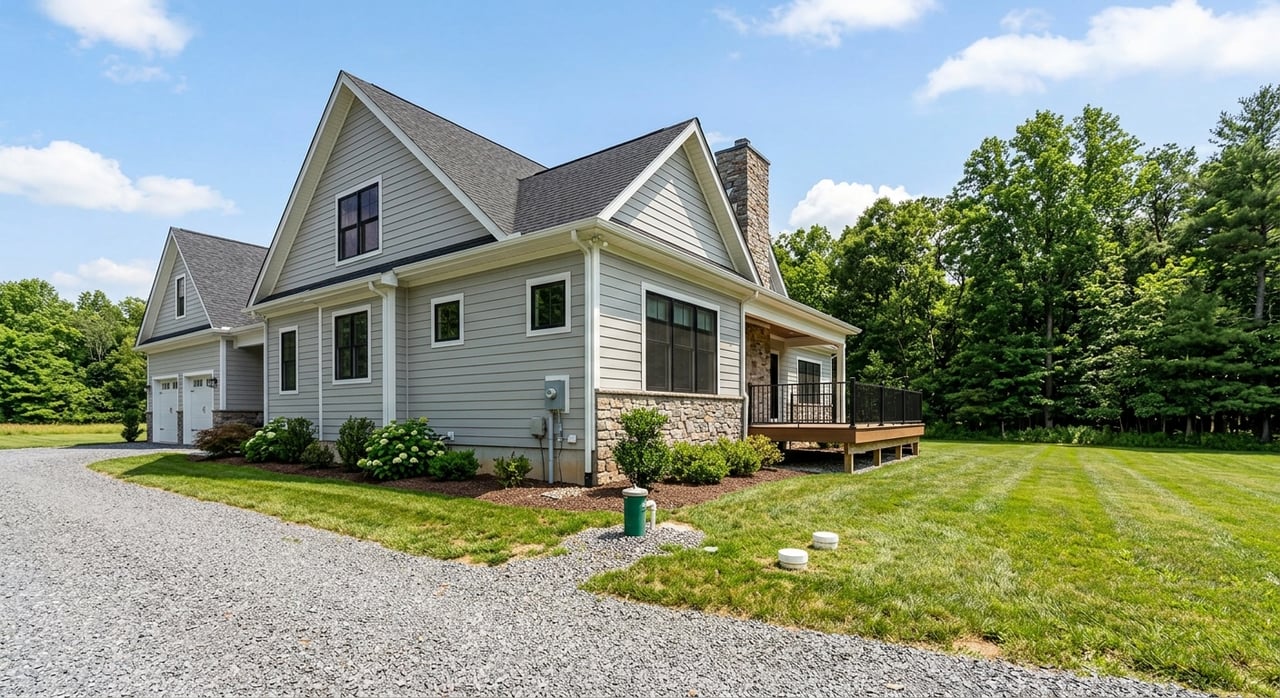
If the property is not served by public sewer, septic planning becomes a major part of your decision. South Carolina’s environmental regulator requires a septic permit before the county can issue a building permit on property without public sewer. The septic application also requires the official plat or deed with dimensions, along with marked property corners and a proposed septic area for site evaluation.
If you are thinking about building, this is a strong reason to get clear on layout and suitability early. A parcel that looks perfect on paper may still need site-specific septic review before you can move forward with confidence.
If you plan to use a private well
Private wells have their own process too. The state requires a notice of intent and well-driller permitting process before construction. In practical terms, that means water planning on acreage often takes more steps than buyers expect.
Access can change everything
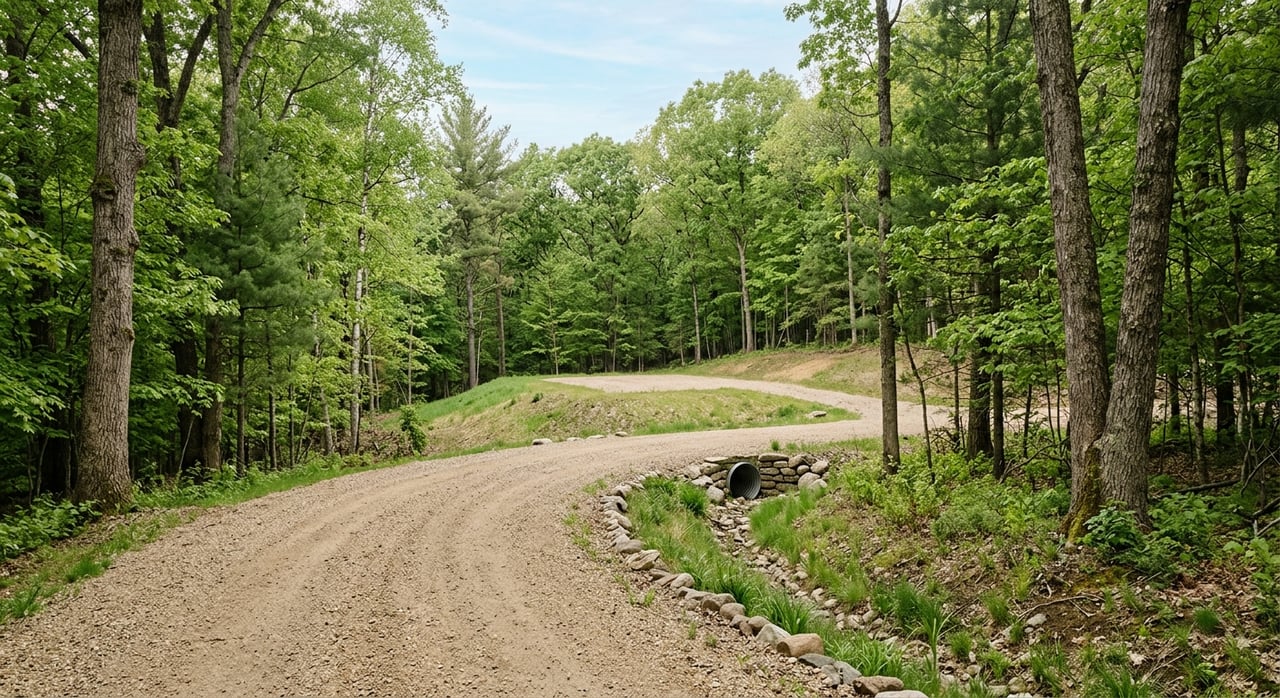
Road access is another area where small acreage differs from a standard homesite. Spartanburg County says county-maintained roads are marked with a red bird logo, while state-maintained roads use the state seal and an S-42-number identifier. That distinction matters because driveway approvals depend on who maintains the road.
The county’s driveway access permit requires the owner or contractor to notify Roads & Bridges before work begins. County subdivision rules also say driveway installation on a county-maintained road needs county encroachment approval, while state roads are handled by SCDOT. If access is unclear, your timeline and cost can change fast.
Cheap land is not always cheaper land
A lower list price can be appealing, but the total cost to make a property usable may be much higher. If a parcel needs a new driveway, utility extension, or access easement cleanup, the real cost can climb well beyond what the price per acre suggests.
County subdivision rules also reinforce the importance of frontage. For example, a flag lot under two acres needs at least 25 feet of frontage, while a flag lot two acres or larger needs at least 50 feet. So even if a tract looks affordable, its shape and access setup can matter just as much as its size.
Floodplain and drainage deserve an early look
Rural and wooded tracts often have natural features that affect where and how you can build. Spartanburg County has a floodplain verification form that identifies the FEMA panel, flood zone, and base flood elevation. The county also points buyers to FEMA’s official public flood-hazard maps.
This is worth checking before you write a strong offer. Floodplain exposure can influence buildability, insurance costs, site design, and overall value. County GIS and OneMap can also help you review aerials and physical geography before moving deeper into the process.
What pricing looks like near Inman
Pricing around Inman depends heavily on the exact property. The recent market snapshots in the research do not point to one single number, but they do show a range that can help set expectations. Depending on source and timing, recent Inman home pricing has been reported with median or average figures from roughly the high $200,000s to the mid $300,000s, with days on market ranging from about 31 to 90 days.
Land pricing shows an even wider spread. Active land examples in Inman included offerings such as 3.3 acres at $69,900, 0.45 acres at $149,999, 0.5 acres at $165,000, 0.78 acres at $305,000, 0.91 acres at $449,000, and 1.27 acres at $849,900. The takeaway is simple: acreage alone does not drive value.
What tends to influence value most
- Road frontage and legal access
- Utility availability nearby
- Sewer versus septic requirements
- Water or creek frontage
- Floodplain and drainage conditions
- Location within the Inman area
- Parcel shape and future usability
Buildability should guide your offer strategy
When you buy small acreage, your offer should leave room to verify the property’s unknowns. Spartanburg County’s permitting flowchart shows separate approvals for sewer or septic, water availability, addressing, fire review, and building permits. The flowchart also notes that planning-issued permits apply only in unincorporated county areas.
That makes early due diligence especially important if you plan to build a home, add an outbuilding, or split the land later. It is smart to confirm zoning, driveway access, stormwater concerns, sewer or septic status, water availability, and addressing before your contract becomes hard to exit.
Smart due diligence steps for acreage buyers
- Review the parcel in Spartanburg County GIS and OneMap
- Confirm whether the tract is in the city or county jurisdiction
- Verify road frontage and legal access
- Ask which road authority controls driveway approval
- Confirm water provider and meter availability by parcel
- Check sewer availability or start septic feasibility review
- Review floodplain and drainage conditions
- Use a current survey or plat when possible
Surveys matter more than many buyers expect
On small acreage, a current survey or plat can save time and reduce surprises. The state septic packet asks for the official plat or deed with dimensions and requires marked corners and a proposed septic area for evaluation. That is a clear sign that accurate property information matters well before construction starts.
If your long-term plans include building, adding structures, or adjusting the property later, a survey gives you a more reliable picture of what you are actually buying. It can also help you avoid confusion over access, layout, and usable area.
Property taxes can affect the long-term cost
Taxes are another piece of the acreage puzzle. Spartanburg County says owner-occupied legal residence can qualify for the 4% assessment ratio, and the property can include up to five contiguous acres. That can make a meaningful difference for buyers planning to live on the property.
The county also offers agricultural special assessment for bona fide agricultural use, with different acreage and income tests and possible rollback taxes if the use changes. If you are considering hobby-farm use, timber, or future development flexibility, it is wise to confirm tax classification rather than assume the bill will work like a standard subdivision home.
A local, practical approach wins here
The best acreage purchases near Inman usually come from asking practical questions early, not rushing toward the cheapest list price. When you verify access, utilities, septic or sewer, floodplain, and jurisdiction up front, you put yourself in a much stronger position to judge real value. That kind of clarity matters whether you are buying a homesite, a lifestyle property, or a long-term land play.
If you want help sorting through small acreage options near Inman, working with a local agent who understands Spartanburg County details can save time and cut down on avoidable risk. For clear guidance on land, homes, and local market strategy, reach out to Michael Dassel.
FAQs
What should you check first when buying small acreage near Inman, South Carolina?
- Start by confirming whether the parcel is inside the City of Inman or in unincorporated Spartanburg County, because land-use rules, permits, and setbacks can differ.
How do utilities work on small acreage in Inman, South Carolina?
- Utility service is parcel-specific, so you should verify the actual water provider, meter availability, and sewer status for the tract instead of assuming it has standard neighborhood utilities.
Do you need a septic permit for land near Inman, South Carolina?
- Yes, if the property is not served by public sewer, South Carolina requires a septic permit before the county can issue a building permit.
Why does road access matter when buying land in Spartanburg County?
- Access matters because driveway permits and encroachment approvals depend on whether the road is county-maintained or state-maintained, which can affect cost and timing.
How can you research a parcel near Inman before making an offer?
- Use Spartanburg County GIS and OneMap to review parcel data, road centerlines, address information, service districts, aerial views, and physical geography.
Does price per acre tell you the full value of land near Inman, South Carolina?
- No, because frontage, access, utilities, floodplain conditions, water features, and overall usability often matter more than raw acreage alone.
Can taxes change based on how you use acreage in Spartanburg County?
- Yes, owner-occupied legal residence and agricultural special assessment can affect how property is assessed, so you should verify classification before you buy.